QS Africa Forum and United Arab Emirates University
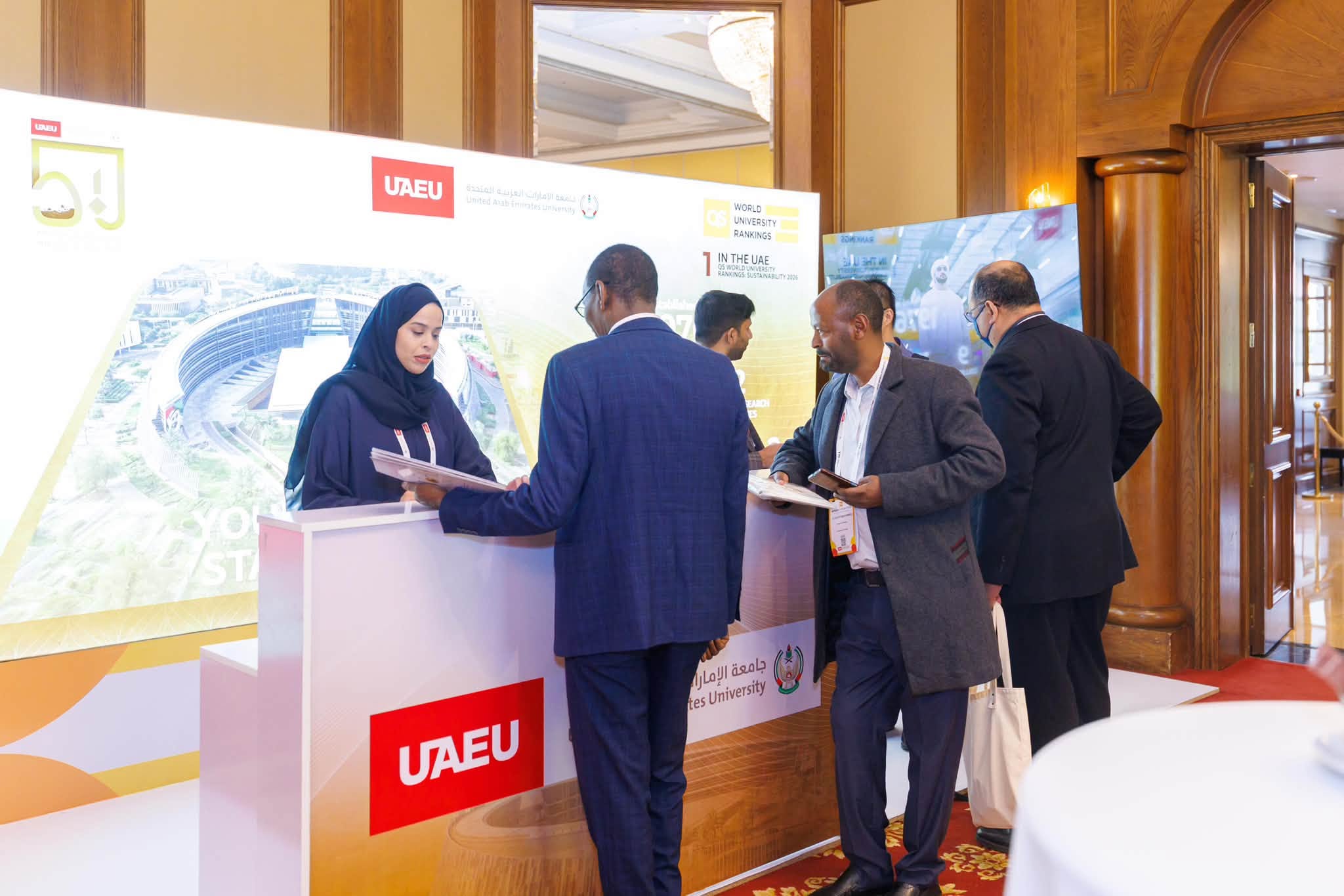
United Arab Emirates University (UAEU) hosted the QS Africa 2026 Higher Education Forum in Addis Ababa, Federal Democratic Republic of Ethiopia, from 9–10 July 2026. Held in collaboration with QS, the forum brought together ministers, university leaders, academics, experts, and representatives from higher education institutions, government, industry, and civil society to discuss the future of higher education across Africa.
In his opening address, Prof. Ahmed Ali Al Raeesi, Vice Chancellor of the United Arab Emirates University, highlighted the significance of the forum as UAEU celebrates its Golden Jubilee this year.
He noted that the United Arab Emirates University was established under the visionary leadership of the late Sheikh Zayed Bin Sultan Al Nahyan, who believed that investing in education is the greatest investment any society can make.
UAEU Prof. Al Raeesi said:
“Academic and research partnerships remind us that the challenges facing the world—whether climate change, food security, digital transformation, or youth employment—know no borders. We must therefore develop innovative solutions that anticipate the future by empowering young people with knowledge and education, enabling them to become successful future leaders.”
Prof. Kindeya Gebrehiwot, State Minister and Adviser at the Ministry of Education of the Federal Democratic Republic of Ethiopia, emphasized the importance of collaboration in advancing higher education and national development.
He noted that universities cannot operate in isolation but must build strong partnerships with industry, government, communities, and other academic institutions to enhance innovation, research, and societal impact.
He further stressed the need to invest in young people, describing them as the nation’s greatest asset and the foundation of future progress. He emphasized that equipping youth with quality education, practical skills, and opportunities for innovation and entrepreneurship is essential to driving sustainable national development.
QS Africa Forum featured panel discussions and specialized dialogues on the future of higher education in Africa. Discussions focused on developing future-ready skills, retaining talent, enhancing graduate employability, expanding opportunities for student and researcher mobility, and examining the role of artificial intelligence in reshaping universities’ education, research, and administrative systems.
Participants emphasized the importance of advancing higher education through a comprehensive approach that aligns skills development with the Sustainable Development Goals. They highlighted the vital role of universities in preparing national talent, fostering innovation, and contributing to economic and social development.
The participants also called for updating academic curricula to better reflect labour market needs, strengthening digital, leadership, and research capabilities, and expanding opportunities for applied learning and internships.
They recommended recognizing graduate employability as a key indicator of the quality of university outcomes and their contribution to national development.
QS Africa Forum further stressed the importance of investing in artificial intelligence as a strategic pillar for education, research, and university governance.
Participants emphasized the need to establish ethical principles for the responsible use of emerging technologies, strengthen cooperation among universities to retain talent, expand academic mobility programs, and forge global partnerships based on knowledge exchange while addressing the priorities of the African continent.
The QS Africa Forum concluded by affirming that achieving sustainable development requires integrating research and community service into the core mission of universities. Participants highlighted the importance of supporting food security, healthcare, water resource management, climate change adaptation, and the empowerment of women and youth.
They agreed that universities that collaborate effectively, foster innovation, and build strong international partnerships are best positioned to create sustainable impact that extends far beyond their campuses.