Study at North South University in Bangladesh from Bhutan
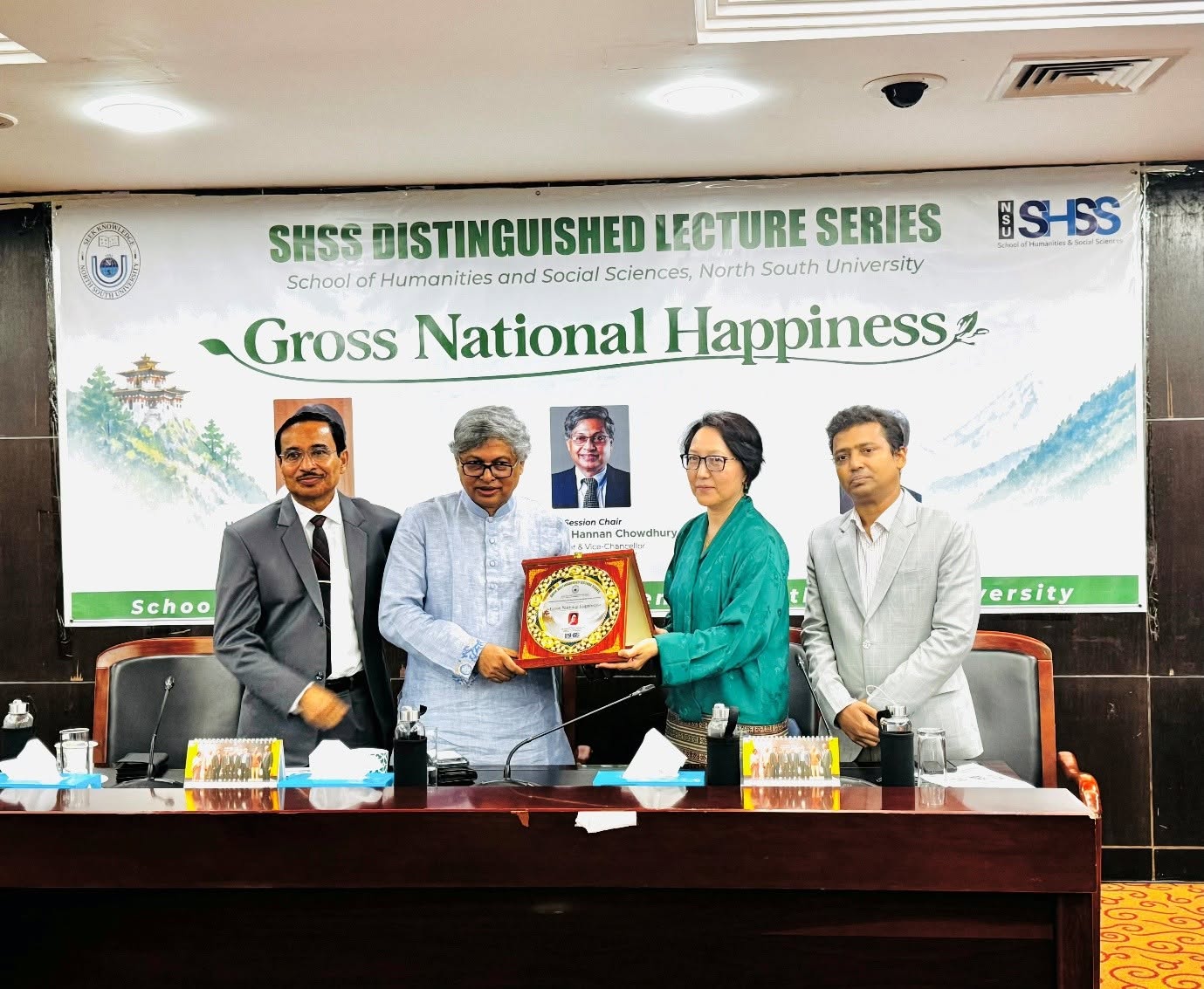
Faculty of Humanities and Social Sciences (SHSS) at North South University (NSU) hosted another session of its Distinguished Lecture Series on Thursday, June 18, featuring a discussion on “Gross National Happiness (GNH).” The keynote address was delivered by Bhutan’s Ambassador to Bangladesh, Dasho Karma Hamu Dorjee.
Event was chaired by NSU Vice Chancellor Professor Abdul Hannan Chowdhury, while Pro-Vice Chancellor Professor Nesar U. Ahmed attended as the special guest. Professor Md. Rizwanul Islam, Dean of the Faculty of Humanities and Social Sciences, welcomed the audience with opening remarks.
During his presentation, Ambassador Dorjee outlined Bhutan’s administrative and democratic systems and provided an overview of the country’s legislative framework and cultural heritage. He explained the philosophy of Gross National Happiness, highlighting its nine domains and 33 indicators used to assess citizens’ well-being. He also described the survey methodology and integrated scoring system employed to measure happiness.
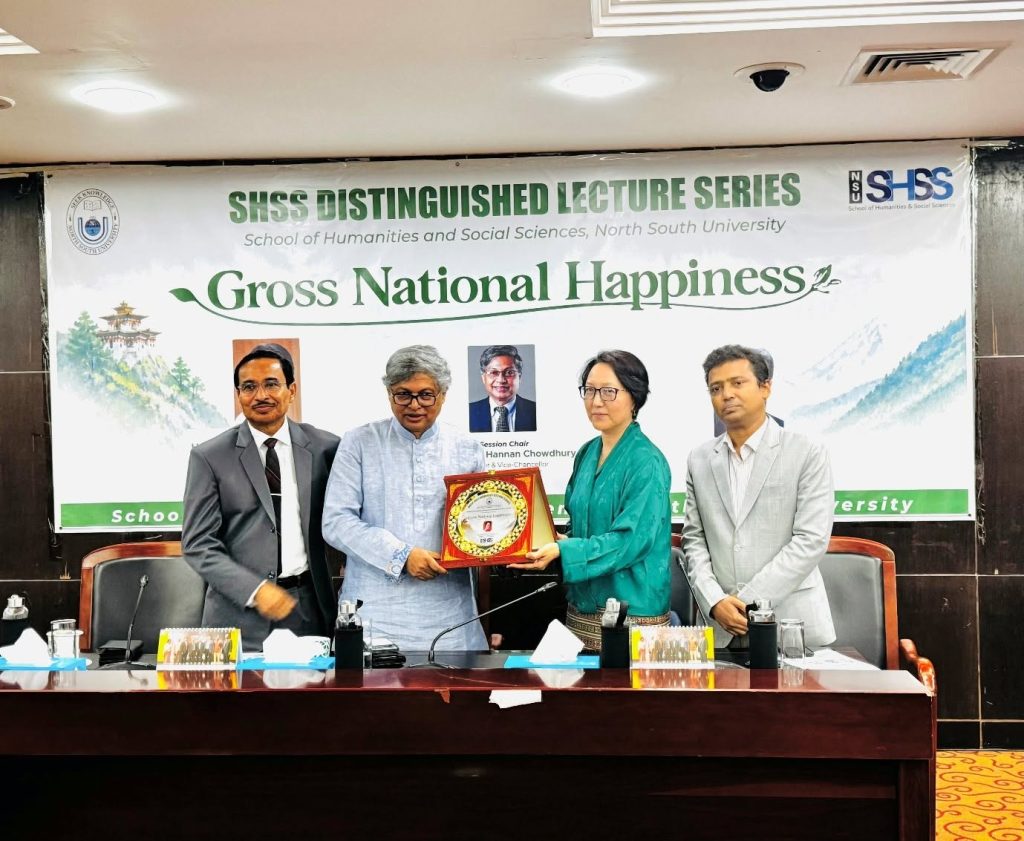
Professor Abdul Hannan Chowdhury praised Bhutan for offering an alternative development model that emphasizes human well-being, environmental sustainability, and balanced progress. He noted that despite its population of around 800,000, Bhutan has set an inspiring example for the global community by prioritizing people and the environment over wealth accumulation.
North South University professor Nesar U. Ahmed commended Bhutan’s long-term commitment to environmental conservation, stating that its policies and political will could serve as valuable lessons for Bangladesh. He stressed the importance of adopting similar initiatives to strengthen environmental protection efforts.
Professor Md. Rizwanul Islam highlighted Bhutan’s unique cultural identity and social values, describing the country as an important regional model for promoting social cohesion and happiness. He also expressed NSU’s interest in expanding academic collaboration with Bhutanese institutions.
Lecture concluded with an engaging question-and-answer session involving students, faculty members, researchers, and professionals. Participants discussed the relevance of Gross National Happiness in contemporary society and explored its role in shaping development policies. The interactive exchange added depth to the event and underscored the growing interest in alternative approaches to measuring national progress.
Are you a student from Bhutan interested in pursuing higher education at North South University (NSU) in Bangladesh? Bright Prep is here to guide you through every step of the admission process.
Frequently Asked Questions (FAQs)
1. What was the topic of the NSU SHSS Distinguished Lecture Series?
The lecture focused on “Gross National Happiness (GNH),” Bhutan’s unique development philosophy that emphasizes the well-being and happiness of its people alongside economic progress.
2. Who delivered the keynote address?
The keynote address was delivered by Karma Hamu Dorji, Ambassador of Bhutan to Bangladesh.
3. When and where was the event held?
The lecture was organized by the Faculty of Humanities and Social Sciences (SHSS) of North South University (NSU) on Thursday, June 18.
4. What is Gross National Happiness (GNH)?
Gross National Happiness is Bhutan’s holistic development framework that measures national progress through nine domains and 33 indicators, taking into account social, cultural, environmental, and psychological well-being in addition to economic growth.
5. What aspects of GNH were discussed during the lecture?
The ambassador explained Bhutan’s democratic system, governance structure, the nine domains and 33 indicators of GNH, the survey questionnaire, and the integrated scoring system used to measure happiness.
6. What did NSU Vice Chancellor Professor Abdul Hannan Chowdhury say about Bhutan?
He praised Bhutan for presenting an alternative development model that prioritizes environmental sustainability, human development, and well-being over wealth concentration.
7. What was Professor Nesar U. Ahmed’s key message?
He highlighted Bhutan’s success in environmental conservation and suggested that Bangladesh could benefit from adopting similar policies and long-term planning.
8. What did Professor Md. Rizwanul Islam emphasize?
He described Bhutan as a model for preserving culture, promoting social cohesion, and fostering happiness. He also expressed NSU’s interest in strengthening academic partnerships with Bhutanese institutions.
9. Was there an interactive session after the lecture?
Yes. The event concluded with a lively question-and-answer session involving students, faculty members, researchers, and professionals.
10. Why is Gross National Happiness important?
GNH offers an alternative approach to measuring national development by emphasizing quality of life, environmental sustainability, cultural preservation, good governance, and overall well-being rather than focusing solely on economic indicators.