Session on Good Governance, Quality and Inclusion Held at South Asian Higher Education Conference
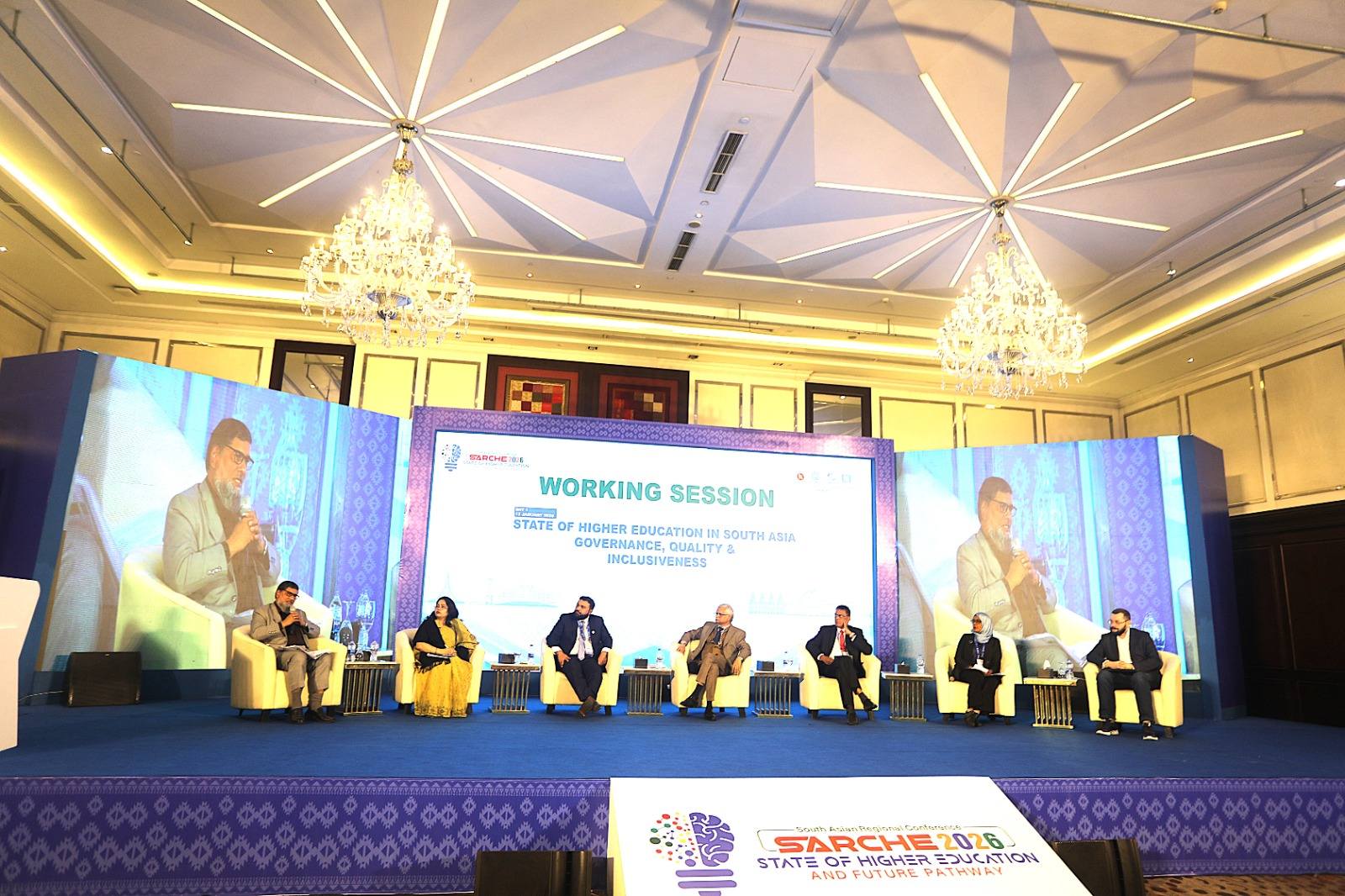
A session titled “Current Status of Higher Education in South Asia, Good Governance, Quality, and Inclusion” was held on Tuesday at Hotel Le Meridien in the capital as part of the South Asian Higher Education Conference.
Session was chaired by Dr. Saleh Hasan Naqib. Speakers included Dr. Saima Haque Bidisha, Executive Director of the Pakistan Higher Education Commission Professor Dr. Zia ul Haque and Vice Chairman of the Sri Lanka University Grants Commission Senior Professor K. L. Wasantha Kumara.
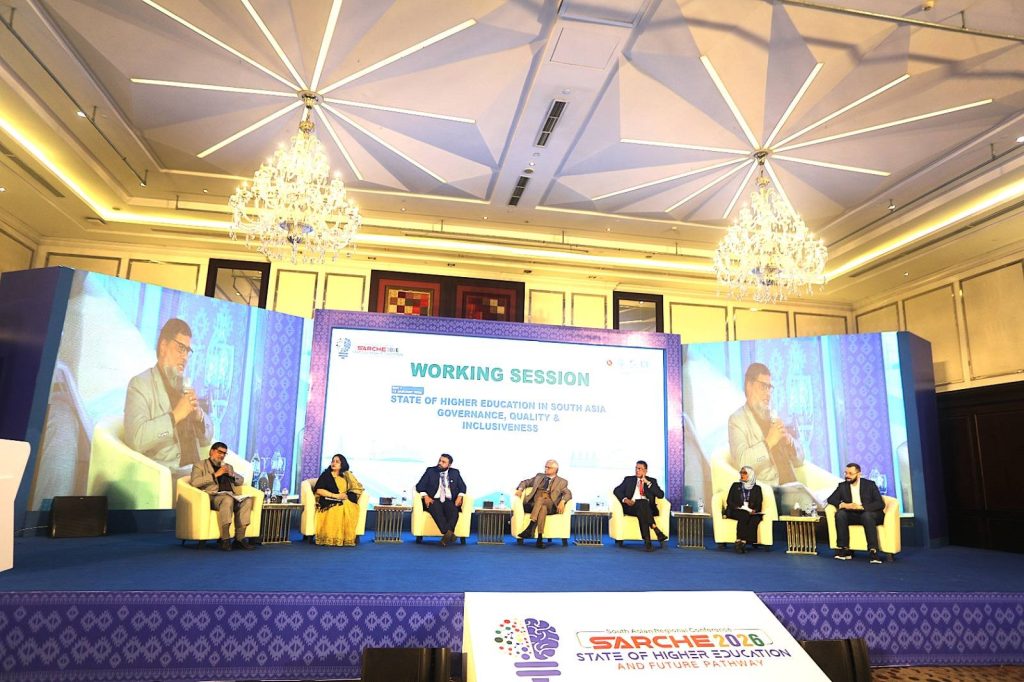
Mariam Fizana Rashid, CEO of the Maldives Qualifications Authority; Denis Nikolaev, Senior Education Specialist of the World Bank and Professor Dr. S. M. Kabir, Member of the Bangladesh Accreditation Council joined the session as discussants.
Three-day South Asian Regional Conference titled “Current Status and Future Directions of Higher Education–2026” began on Tuesday. Principal Advisor Professor Dr. Muhammad Yunus inaugurated the international conference as the chief guest.
Conference has brought together 30 international delegates, including representatives from the United Kingdom, Maldives, Malaysia, Nepal, Pakistan, Sri Lanka and the World Bank.
It is being organized under the Higher Education Acceleration and Transformation (HEAT) project, implemented by the Bangladesh University Grants Commission (UGC) with funding support from the Government of Bangladesh and the World Bank.
Representatives from UGCs and Higher Education Commissions of SAARC countries, vice-chancellors, academicians, and researchers are participating in the event. The conference aims to enhance the quality of higher education in Bangladesh and strengthen regional collaboration among SAARC nations.
On Wednesday, sessions will focus on:
- Artificial Intelligence (AI) coordination, digital transformation, and smart learning ecosystems
- Graduate employability and industry–academia collaboration
- Future roadmap of higher education through collaboration and networking
- Stakeholder dialogue in higher education transformation
- Voice of civil society
- Dialogue with vice-chancellors in the context of HEAT projects
On the final day, discussions on Gender Issues in Higher Education will be followed by the adoption of the Dhaka Higher Education Declaration, also known as the Dhaka Declaration, according to the UGC.
Conference will continue until January 15, with a total of eight sessions scheduled over the three-day program, focusing on governance, quality assurance, digital transformation, inclusion, and regional cooperation in higher education across South Asia.