Center for Climate Change and Disaster Resilience at North South University
North South University’s (NSU) Center for Climate Change and Disaster Resilience (CDR) organized a seminar titled “How Asia is Leading the Green Transformation and How Bangladesh Can Benefit” on 8 February 2026 at the Syndicate Hall of North South University.
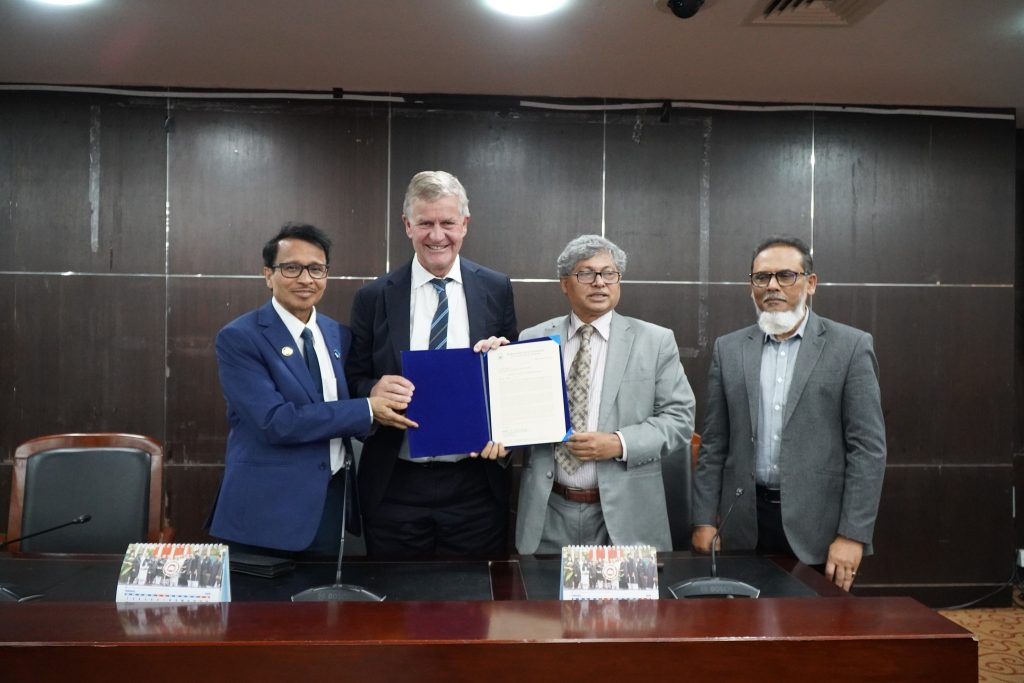
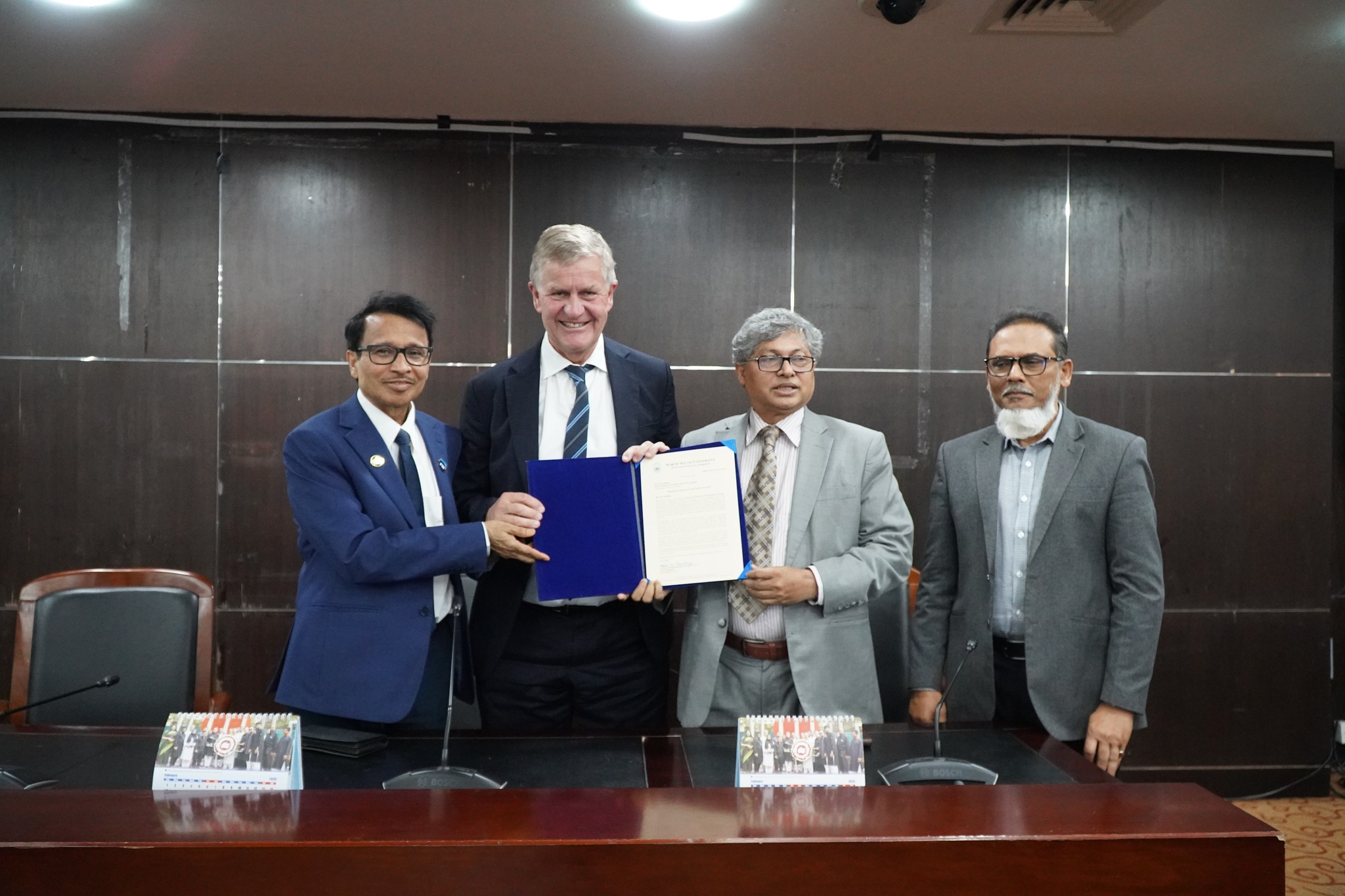
Seminar was attended by Erik Solheim, president of the Belt and Road Green Development Initiative and former Norwegian minister of environment and international development. The session was chaired by Abdul Hannan Chowdhury, vice-chancellor of NSU. Nasar Uddin Ahmed, pro-vice chancellor of NSU, and Alex Wang, secretary general of the China–Bangladesh Partnership Forum, were also present. The discussion was moderated by Md. Jakariya, director of the CDR Center at NSU.
During the event, NSU conferred the title of honorary professor on Erik Solheim, recognizing his global contributions to environmental policy and sustainable development.
In his keynote remarks, Solheim highlighted Bangladesh’s strong potential for sustainable economic growth, describing “immense opportunities” in solar energy, electric vehicles, recycled-based industries, and land protection. He noted that strategic investment in these sectors could enable the government, civil society, and the private sector to position Bangladesh as a leading green economy in the coming decades.
Pro-vice chancellor Nasar Uddin Ahmed emphasized the importance of political and institutional commitment to environmental policies. He observed that the primary challenge is often not the absence of solutions but a lack of commitment, as business interests can significantly influence policy decisions.
Vice-chancellor Abdul Hannan Chowdhury drew attention to the environmental consequences of rapid industrialization, including river pollution caused by industrial waste. He stressed the need for large-scale sustainable initiatives and responsible development projects to address Bangladesh’s growing environmental challenges.
The seminar brought together academics, researchers and students with discussions focusing on Asia’s leadership in green transformation, climate resilience, and practical pathways for Bangladesh to achieve its sustainable development goals.


